

Douro Valley wine tours are easiest to choose once you decide what matters most: effortless transport from Porto, serious winery time, a river cruise, or freedom to explore independently. For a first visit, the strongest all-round format is usually a full-day small-group tour from Porto with two winery visits, lunch and a short Pinhão cruise. Independent travellers can build a more flexible day around the Douro railway line and Pinhão, while wine-focused visitors gain more by staying overnight and booking estates directly rather than trying to compress the valley into ten hours.
Douro Valley wine tours fall into four useful formats. Choose a shared Porto day tour for the least friction; a small-group or private tour for better pacing and more wine depth; train to Pinhão for the best car-free independent day; or self-drive only if someone in the group will remain sober. Current operator listings checked in September 2026 show mainstream full-day shared trips from Porto around €89–€125, usually lasting about ten hours. A simple one-hour Pinhão river cruise is currently advertised from €15, while individual estate visits commonly start around the mid-€20s to low-€30s depending on the producer and tasting.
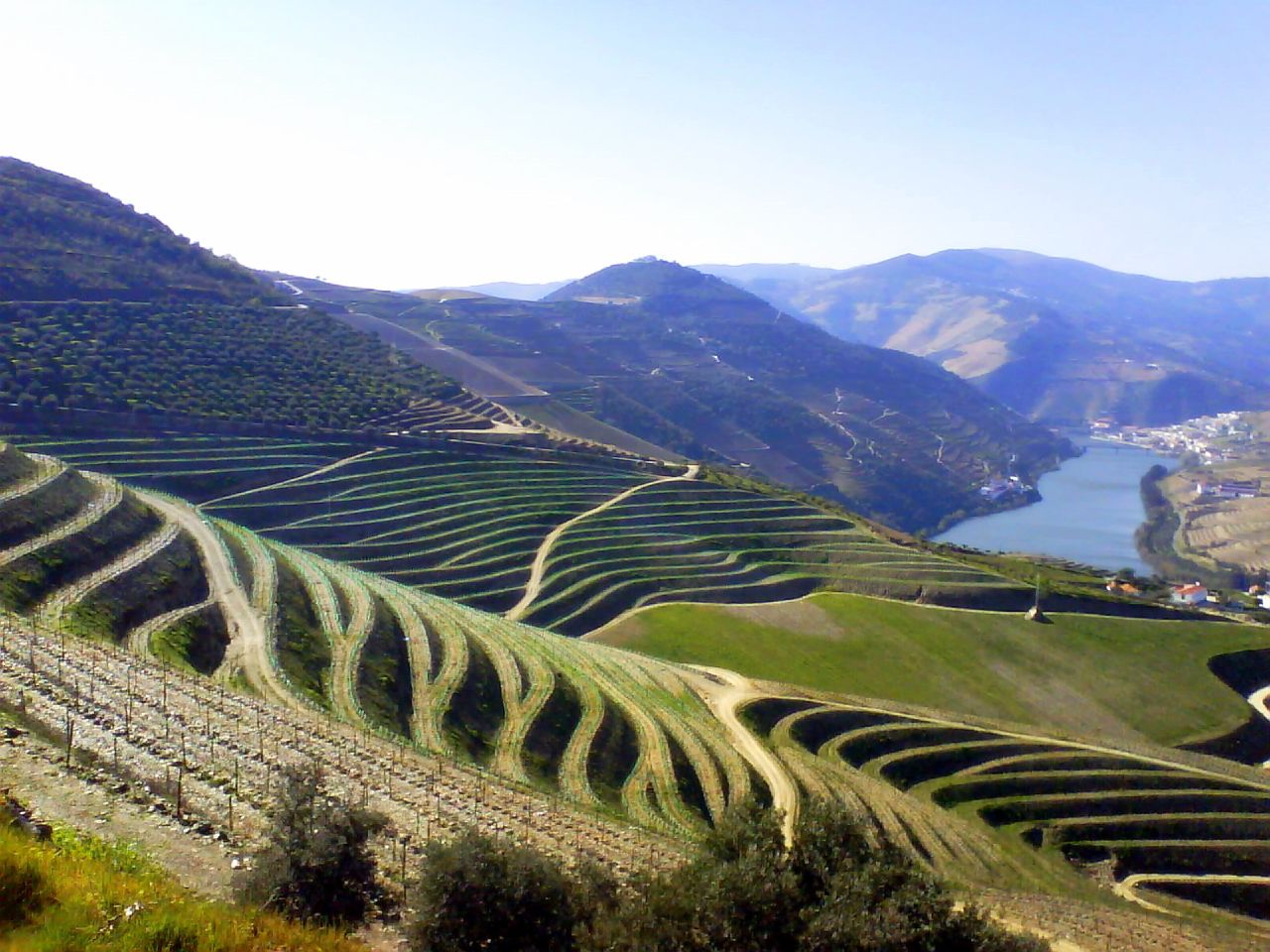
The landscape is not incidental to the experience. UNESCO describes the Alto Douro Wine Region as a living cultural landscape shaped by nearly two millennia of viticulture, with terraces, quintas, villages and wine infrastructure forming one system. UNESCO’s Alto Douro Wine Region record is useful background before planning because it explains why the valley is more than a succession of tasting rooms.
How Douro Valley wine tours differ
Shared full-day from Porto
The most practical first-timer format. Typical current products combine road transport, one or two estates, tastings, lunch and a short cruise. The trade-off is a fixed itinerary and less control over which producers you visit.
Small-group or private
Better for people who care about producers, wine styles and conversation with guides. You pay for pacing, flexibility and fewer compromises. Current listings place many small-group days above standard coach-style tours, with private trips substantially higher.
Train to Pinhão
The strongest independent option without a car. You get the scenic Douro railway journey, can walk to a major estate, add lunch and a one-hour cruise, then return to Porto. It rewards careful timing but avoids driving after tasting.
Self-drive
Best for viewpoints, villages and lesser-known quintas, but only with a designated driver. Turismo de Portugal explicitly warns that Douro roads can be narrow, twisting and constantly undulating. Scenic freedom is real; so is the fatigue.
The strongest Douro Valley wine tours do not necessarily include the greatest number of tastings. Two well-paced estate visits, a proper lunch and one river segment usually produce a better day than rushing through three or four wineries. If an itinerary advertises many stops, inspect how much time is actually spent at each producer and whether “wine tasting” means Port only, Douro DOC wine, or both.
Pinhão or Peso da Régua: where to centre the day
Pinhão
Choose Pinhão if your priority is the classic wine-valley experience. Turismo de Portugal calls it the geographical centre of the Douro demarcated region, and several major estates sit in or near the village. The tiled railway station is an attraction in its own right, the quay has frequent short cruises, and Quinta do Bomfim is exceptionally convenient for visitors arriving by train.
Peso da Régua
Choose Régua if you want a broader regional base, easier access to the Douro Museum, or estates around the Baixo Corgo and Lamego side of the valley. Quinta do Vallado and Quinta da Pacheca are natural anchors. Régua is also useful when combining road travel, museum time and wine rather than building the day around riverfront Pinhão.
For a single day from Porto, Pinhão has the cleaner logic. It concentrates railway, river cruise, restaurants and nearby wine estates into a compact node. Régua becomes more attractive when you have a car, a driver or an overnight stay and can spread the programme across two days.
Five winery experiences worth structuring around
Quinta do Bomfim · Pinhão
The easiest serious estate for a car-free visitor. Symington’s official visitor page describes tastings of Port and Douro DOC wines, vineyard walks, the 1896 lodge and modern lagares. It is in Pinhão itself, making it an unusually efficient anchor for a train-based day. Check Quinta do Bomfim visits and current hours.
Quinta do Seixo · Valença do Douro
A strong choice when landscape and winery design matter as much as the tasting. Sogrape currently lists a standard Sandeman visit at €26 for roughly 50 minutes with three Ports, alongside Douro DOC, old-tawny, vineyard and seasonal picnic programmes. See current Quinta do Seixo experiences.
Quinta do Vallado · near Régua
One of the better bases for visitors who want contemporary Douro wine, a historic estate and the possibility of staying overnight. The winery is open to the public for scheduled tours and commented tastings throughout the year; advance reservation is sensible because visits operate at defined times.
Quinta da Pacheca · Lamego/Régua side
Useful when you want wine tourism to become the destination rather than a quick stop. Pacheca combines tastings, guided experiences, dining and accommodation among the vineyards; its 2026 programme is also actively promoting harvest experiences. Check Quinta da Pacheca’s current wine-tourism options.
Quinta da Roêda · Pinhão
Croft’s estate is particularly good for visitors who want to spend time in the vineyard itself. Current tourism information includes guided experiences and a self-guided vineyard format, making it a useful second stop around Pinhão when you want contrast with a more conventional cellar-led visit.
A one-day itinerary that actually works
For independent travellers, one of the most efficient ways to experience Douro Valley wine tours without a car is to make Pinhão the whole day rather than trying to cover the entire region. Start early from Porto by train, walk to a pre-booked estate visit, have lunch in the village, take a one-hour river cruise, then either add a second nearby estate by taxi or keep the afternoon unstructured before returning by train.
Travel Porto → Pinhão early
Use Porto São Bento or Campanhã as appropriate for the service. CP currently shows Douro Line trains running through to Régua, Pinhão and Pocinho, but 2026 has also brought timetable changes and occasional replacement-road segments. Check CP’s Douro Line notice again shortly before travel.
Book one meaningful morning tasting
Quinta do Bomfim works especially well because it is in Pinhão. Allow enough time for the visit rather than treating it as a tasting counter; vineyard, cellar and production context are what make a Douro estate visit different from a Port lodge in Gaia.
Lunch before the cruise
Keep lunch central and unhurried. The valley’s roads and tasting schedules punish tight connections, so avoid booking a restaurant far outside Pinhão if you are relying on trains and taxis.
Add one hour on the river
A short cruise gives you a different reading of the terraces without consuming the entire day. One current Pinhão–Romaneira–Pinhão sailing is advertised at €15 for one hour, with frequent departures in the main season. Check the current Pinhão cruise schedule.
Choose depth or a second estate
If you still want more wine, use a taxi to a nearby producer and book it in advance. If not, keep time for the station’s azulejos, the waterfront and an earlier train home. The day is better when it ends before logistics become stressful.
Important current transport note: CP has published Douro Line operating changes during 2026. Do not build a tight same-day itinerary from an old blog timetable; check the official CP service notice and the exact train you intend to use.
Port wine versus Douro DOC: choose the tasting you actually want
Port wine
Port is fortified and the classic styles you may encounter include white, ruby, tawny and vintage expressions. A Port-focused visit is ideal if you want to understand ageing, blending and the historic trade that links the Douro vineyards with the lodges in Vila Nova de Gaia.
Douro DOC
Douro DOC wines are the region’s dry table wines: reds are especially prominent, but serious whites and rosés are also produced. If your interest is contemporary Portuguese wine rather than fortified wine alone, confirm that at least one tasting explicitly includes Douro DOC.
The Instituto dos Vinhos do Douro e do Porto frames the region around both the quintas where wine is produced and the Port lodges in Gaia where visitors can explore the ageing tradition. That distinction matters: a Gaia cellar tour is not a substitute for the vineyard landscape, and a Douro day is not the same experience as tasting mature Port in the city.
When to go
March–May
Good for greener slopes, cooler walking conditions and a calmer feel before peak summer. Not every seasonal vineyard activity will be running early in spring, so check estate calendars.
June–August
Long days and strong availability of cruises, but also heat and heavier demand. Build more slack into road itineraries and avoid planning ambitious vineyard walks at the hottest part of the day.
September–early October
The most atmospheric period if harvest is your priority. Quinta do Bomfim describes harvest as typically September into early October, while several estates sell dedicated vindima programmes. Availability can tighten quickly.
Late autumn–winter
Quieter and more contemplative, with fewer crowds and a different landscape. Core winery visits continue at several major estates, but seasonal picnics, vineyard programmes and cruise frequency can be reduced.
What Douro Valley wine tours cost in practice
Prices move with season, group size and inclusions, so treat any figure as a current advertised example rather than a permanent tariff. The useful comparison is not simply price; it is what portion of the day is genuinely spent in the valley and what is included once you arrive.
| Format | Current example | Typical scope | Best for |
|---|---|---|---|
| Pinhão river cruise | €15 | 1 hour, river scenery | Independent day |
| Quinta do Seixo standard visit | €26 | About 50 min, 3 Ports | Focused estate visit |
| Shared full-day from Porto | €89–€125 | About 10 h; wine, lunch, cruise vary | First visit |
| Private full-day from Porto | From about €410 on one current listing | Private transport, tastings, lunch/cruise depending on product | Flexibility |
Current listings from established Porto operator Living Tours show shared Douro products at €89, €99 and €125 depending on itinerary and group format, while a private wine day is listed from €410. Those are snapshots, not official regional prices. Before paying, compare whether hotel pick-up, lunch, tasting count, cruise, estate names and cancellation terms are actually included.
Booking mistakes that reduce the value of the day
- Booking by tasting count alone. Eight or ten samples do not automatically mean a better tour; producer quality, pacing and context matter more.
- Assuming every tour includes both Port and Douro DOC. Read the wine description closely and choose the category you actually want to learn about.
- Ignoring estate names. Some itineraries promise “a winery” and reserve the right to substitute. That can be fine, but it matters if a specific producer is the reason you are going.
- Using an old train timetable. The Douro Line has had 2026 service changes. Recheck CP before departure and preserve buffer time on the return.
- Driving after tastings. If you self-drive, designate someone who will not drink. The combination of alcohol, steep valley roads and tight bends is not a reasonable compromise.
- Overloading a day trip. Porto–Douro transfers already consume time. Two wineries, lunch, one cruise and perhaps one viewpoint is a substantial full day.
- Treating the river cruise as interchangeable with a winery visit. The boat explains the geography; the estate explains the wine. They complement each other rather than replace each other.
This is where Douro Valley wine tours separate into good and mediocre products. The best itinerary protects time at the estates and uses transport and the river to clarify the landscape. The weakest one simply accumulates attractions because they are easy to list on a booking page.
The decision rule
First visit from Porto: choose a shared small-group day with two winery visits, lunch and a one-hour Pinhão cruise. Wine-first trip: sleep in Pinhão or Régua and book estates directly. Budget, car-free trip: train to Pinhão, pre-book one estate and add the €15 river cruise. Scenery-first trip: use a private driver or sober designated driver so viewpoints and secondary roads remain practical. In all four cases, Douro Valley wine tours work best when the day is built around one clear priority rather than trying to see the whole region at once.
Need help turning a Portugal trip into a practical plan?
PortugalPath can help you think through destinations, transport logic and travel planning choices. Use the PortugalPath contact page to get in touch. Availability, prices and bookings remain subject to the relevant operators.
Sources and Verification
- UNESCO World Heritage Centre — Alto Douro Wine Region, inscription and cultural-landscape description.
- Turismo de Portugal / VisitPortugal — Douro Valley, Pinhão, Port and Douro Wine Route, and road-travel guidance.
- IVDP — Instituto dos Vinhos do Douro e do Porto — official wine-tourism and Port-region context.
- CP — Comboios de Portugal — Douro Line service status and current operational notice.
- Symington Family Estates — Quinta do Bomfim visitor information and opening periods.
- Sogrape Wine Tourism — Quinta do Seixo current experiences, durations and prices.
- Current operator listings checked in September 2026 — Douro.com.pt and Living Tours for representative tour and cruise prices.
Image Credit
- “Oporto terraced vineyards” — Feliciano Guimarães, via Wikimedia Commons, licensed under CC BY 2.0. No editorial endorsement implied.