

Authority / Evidence Dossier · Last verified: 12 September 2026
There is no current rule requiring every applicant to open a Portuguese bank account for the new qualified job-seeker route. More importantly, the visa is not presently application-ready: Portugal replaced the old general job-seeker visa with a visto para procura de trabalho qualificado in October 2025, but applications remain suspended until the required implementing rules define the specialised technical competences covered by the route.
For Portugal Job Seeker Visa bank account requirements, separate the legal financial-means rule from the evidence a consular post may eventually request. The implementing regulation still states that a job-seeker application must show financial resources equal to at least three times the guaranteed minimum monthly wage. With the 2026 mainland minimum wage at €920, that benchmark is €2,760. Neither that rule nor Article 57-A says the money must sit in a Portuguese bank account. However, because the qualified route is not yet open, €2,760 should not be treated as a complete current filing checklist or as a guarantee that a future post will accept any particular statement format.
Why the Answer Changed After October 2025
A large amount of search content still describes Portugal’s former job-seeker visa as though it were open to a broad range of applicants. That is no longer the correct starting point. Law n.º 61/2025, effective from 23 October 2025, changed Article 57-A of the Foreigners Law and renamed the category the qualified job-seeker visa. The amended rule says it may be granted to a person with specialised technical competences and authorises highly qualified professional activity during the visa’s validity.
The same law requires those specialised technical competences to be defined by an interministerial Portaria. As of 12 September 2026, PortugalPath could not verify that the required Portaria has been published. The current Portugal VFS information for Brazil still states that the old job-seeker category can no longer be accepted and that the replacement may be submitted only after the necessary regulation is issued. VFS is an outsourced intake channel, not the authority that makes Portuguese immigration law, but this notice is important operational evidence of what consular channels are currently accepting.
The position is reinforced by a very recent legislative check. Law n.º 62/2026, published on 10 September and effective on 11 September 2026, still refers in Article 52 to the visto para procura de trabalho qualificado. It did not reinstate the former general visa or supply the missing specialised-skills Portaria. That makes it unsafe to use an old 2024 or 2025 checklist as though it were a live application instruction today.
Some still-accessible consular or visa-centre pages continue to display the former job-seeker process, including the 120-day structure and old document lists. Those pages can be useful historical evidence, but they do not override the October 2025 legislative change or a current notice saying new applications are not being accepted. A live webpage is not automatically a current rule.
Portugal Job Seeker Visa bank account requirements: law, evidence and practice
The financial question has three layers. First is the legal requirement to have sufficient means. Second is the documentary method used to prove those means. Third is the location of the bank holding the funds. Online guides often merge those layers and end up stating that a “Portuguese bank account” is mandatory even when the underlying rule says only “financial resources” or an operational checklist asks only for statements.
The relevant financial provision is Article 12-A of Decreto Regulamentar n.º 84/2007. Its wording predates the qualified redesign and still refers simply to a “job-seeker visa.” Paragraph 4 sets the amount at at least three times the guaranteed minimum monthly wage. Portugal’s Decree-Law n.º 139/2025 fixed the mainland guaranteed minimum monthly wage at €920 from 1 January 2026. Three times €920 is therefore €2,760.
That €2,760 figure is a current legal benchmark in the subsistence regulation, not a statement that an applicant should now transfer €2,760 to Portugal and file. The route itself is waiting for operational regulation. A future Portaria or consular checklist may specify how funds must be evidenced, which documents are acceptable, how recent they must be, whether additional financial evidence is needed, and how the rule interacts with the new skilled-eligibility test.
Does the Money Have to Be in Portugal?
No current primary source checked for this article says that the required funds must be held in a Portuguese bank account. That distinction matters. “Available resources” is not the same legal proposition as “money deposited at a Portuguese bank.” A local account may be convenient for rent, salary and payments after relocation, but convenience does not make it a visa condition.
Historical official process material supports that distinction. A Brazil VFS checklist dated 24 September 2025, when the old general route still existed, required resources of €2,610 — three times the then €870 minimum wage — or the equivalent in Brazilian reais. That wording is difficult to reconcile with the claim that funds universally had to be parked in Portugal. The same checklist offered a responsibility-term alternative and asked the sponsor for the previous year’s IRS return and three months of bank statements.
That 2025 checklist is not a current application checklist. It is useful only to show how the old regime implemented the underlying financial rule: consular evidence could involve bank records without turning “bank statement” into “Portuguese bank account.” Anyone selling a bank-opening service as a compulsory step for today’s qualified route should be able to point to the current legal provision or current jurisdiction-specific checklist that says so.
The same distinction appears elsewhere in Portugal’s visa system. PortugalPath’s current guides on remote-work residence visa bank evidence and temporary-stay remote-work bank evidence show why a substantive means test, a request for bank statements and a Portuguese-account requirement should be verified separately rather than treated as synonyms.
What About a Sponsor or Term of Responsibility?
Article 12-A also contains a responsibility-term mechanism. In general terms, it allows proof of subsistence through a term signed by a Portuguese citizen or by a foreign citizen legally resident in Portugal who undertakes responsibility for the applicant’s food and accommodation and for removal costs in the event of irregular stay. For the job-seeker provision, the sponsor must also have the financial means referred to in the three-times-minimum-wage rule.
Under the former route, the September 2025 Brazil checklist made this alternative concrete: the sponsor’s signature had to be recognised, and the sponsor had to provide tax and banking evidence. This is useful background, but the same caution applies. The qualified job-seeker route is not currently accepting new applications, so applicants should not prepare an old-format responsibility term and assume it will satisfy a future qualified-route checklist unchanged.
Required by the regulation: proof of sufficient financial resources at the job-seeker benchmark, unless an applicable lawful alternative or exemption is used.
Conditional evidence: bank statements, statement history, currency presentation, sponsor documents and certification requirements may be specified by the competent filing post when the route becomes operational.
Not established as universal: a Portuguese IBAN, an account opened before the visa application, a deposit held specifically in Portugal, or a fixed “seasoning” period for the applicant’s money under the new qualified route.
Bank Statements: What Can Be Said Now, and What Cannot
It is reasonable to expect financial evidence to remain important, because the subsistence rule remains in the implementing regulation. It is not reasonable to invent a final document list before Portugal publishes one for the qualified route. This is especially important for Portugal Job Seeker Visa bank account requirements because old country-specific checklists did not all express evidence in exactly the same way.
A bank statement can prove several different things: that funds exist, that the applicant controls the account, that the balance is accessible, and sometimes that income or savings have a traceable history. But the law’s financial threshold does not by itself establish a universal three-month statement rule, a minimum account age, a prohibition on recent transfers, or a requirement that every euro come from salary. Those are evidentiary questions that must be checked against the future checklist and any lawful additional-document request.
Applicants should also distinguish an applicant’s own funds from a sponsor’s evidence. The old Brazil checklist, for example, expressly requested three months of statements for a sponsor using the responsibility-term route. That historical fact should not be transformed into a claim that the future qualified route will necessarily demand exactly three months from every applicant.
The Qualified-Work Requirement Matters More Than the Bank Account
The most important change is easy to miss if the search begins with banking. Article 57-A now limits the route to people with specialised technical competences and authorises highly qualified activity. The law says those competences are to be defined by Portaria. Until that instrument is published and the application channel opens, a person cannot make the old route current simply by showing €2,760, opening a Portuguese account or obtaining an IEFP document used under the former system.
The current legal text still gives the qualified visa a 120-day period, potentially extendable by 60 days, and says it permits one entry. It also links the visa to a later residence-permit application after qualifying professional activity begins, subject to the general residence conditions. AIMA is the current authority for the residence-permit stage; Portuguese consular authorities handle the national-visa stage, with VFS or another external provider acting only as an intake service where appointed.
This division of responsibility is why an AIMA page describing residence formalities for someone who already holds a job-seeker visa does not prove that a consulate is currently accepting new qualified-visa applications. The relevant question before spending money on banking, translations or reservations is whether the consular route itself is open and what its current checklist says.
- Route status: confirm that the qualified job-seeker visa has actually opened for applications.
- Eligibility Portaria: check the published definition of “specialised technical competences” rather than relying on an old general job-seeker description.
- Current financial benchmark: recheck the minimum wage and the final subsistence instructions in force on the filing date.
- Bank location: look for explicit wording requiring a Portuguese account. Do not infer it merely from a request for statements.
- Statement period: follow the exact current checklist for the consular jurisdiction where you are entitled to apply.
- Currency and format: verify whether balances must be shown in euros, converted from local currency, certified, translated or stamped.
- Sponsor route: if relying on a term of responsibility, verify the future qualified-route form, signature formalities and sponsor evidence.
- Source date: reject guidance that still treats the pre-23 October 2025 general visa as open without addressing Law n.º 61/2025.
Common Claims That Need Correction
“You need a Portuguese bank account before you apply.”
Not established by the current national legal texts checked. A future operational checklist could add specific evidence requirements, but a service provider’s banking package is not a substitute for an official rule.
“The current minimum balance is definitely €2,760.”
€2,760 is the mathematical result of the regulation’s three-times-RMMG rule using the 2026 €920 mainland minimum wage. It is a strong legal benchmark, but there is no open qualified-route application process whose final checklist confirms that this figure alone is sufficient today.
“Three months of statements are mandatory for everyone.”
That was a feature of some old operational checklists and sponsor evidence. PortugalPath did not verify a final current statement-period requirement for the qualified route because that route is not yet operational.
“If I have the money, I qualify.”
No. Financial means are only one layer. The new route is explicitly tied to specialised technical competences and highly qualified work. The missing implementing Portaria is central to determining who can use the route.
If you want help separating the current legal rule from older visa checklists and preparing questions for the correct consular channel, PortugalPath can discuss the scope of support relevant to your move. No private adviser can guarantee that a visa will open, that a particular document will be accepted, or that an application will be approved.
The Practical Position
The best current answer to Portugal Job Seeker Visa bank account requirements is therefore narrower than many online guides suggest. Portugal’s law now provides for a qualified job-seeker visa, but new applications remain suspended pending the regulation that defines the specialised technical competences. The subsistence regulation still contains a three-times-minimum-wage requirement, which corresponds to €2,760 using the 2026 mainland minimum wage of €920. Nothing in the national provisions checked says those funds must be held in a Portuguese bank.
Historical checklists show that bank statements and sponsor evidence can be operational requirements, but they cannot safely be copied into the new qualified route before a current checklist exists. Do not pay for a Portuguese account, move funds, or order time-sensitive documents solely because an old article says they are mandatory. First verify that the route has opened; then use the exact checklist for your competent Portuguese consular jurisdiction.
Related PortugalPath Guides
Sources and Verification
- Diário da República — Law n.º 61/2025. Verified the October 2025 redesign of Article 57-A, the qualified-job-seeker terminology, specialised technical competence requirement and need for implementing regulation. Accessed 12 September 2026.
- Diário da República — Article 57-A, Foreigners Law. Verified the current legal text, including qualified purpose, 120-day period, possible 60-day extension and the requirement for a Portaria defining specialised technical competences. Accessed 12 September 2026.
- Diário da República — Article 12-A, Decreto Regulamentar n.º 84/2007. Verified the three-times-minimum-wage resources rule and the responsibility-term framework. Accessed 12 September 2026.
- Diário da República — Decree-Law n.º 139/2025. Verified the €920 mainland guaranteed minimum monthly wage effective from 1 January 2026. Accessed 12 September 2026.
- VFS Global Portugal / Brazil — Important information. Verified the operational notice that the old job-seeker visa stopped being accepted from 23 October 2025 and that the qualified replacement awaits regulation. Accessed 12 September 2026.
- VFS Global Portugal / Brazil — former job-seeker checklist dated 24 September 2025. Used only as historical operational evidence for proof of funds, equivalent value in Brazilian reais and sponsor bank documents; not treated as a current qualified-route checklist. Accessed 12 September 2026.
- Diário da República — Law n.º 62/2026. Verified that the Foreigners Law, as amended with effect from 11 September 2026, continues to refer to the qualified job-seeker visa in Article 52. Accessed 12 September 2026.
Verification note: no real or generated images are used. This article provides general information, not an individual legal opinion. Because the new qualified route is not yet operational, readers should recheck the official visa portal and their competent Portuguese consular post immediately before acting.
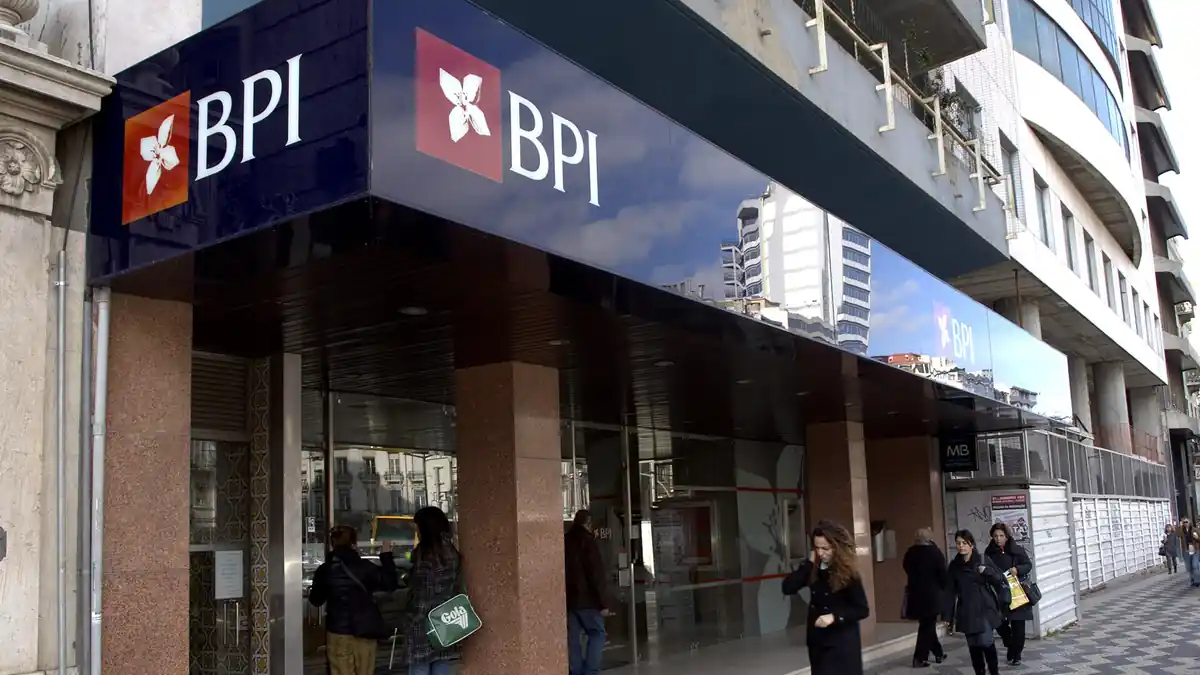
Photo credit: Shatabisha, 29 February 2012 — Source: Wikimedia Commons — License: CC BY-SA 3.0