

Portugal mortgage rates for foreigners are not set by one national tariff: in September 2026, the practical price depends on whether you are resident or non-resident, your loan-to-value ratio, income currency, credit profile, property use, chosen rate structure and any optional products used to reduce the spread. A foreign buyer can obtain a Portuguese mortgage, but published non-resident products commonly require substantially more equity than the regulatory maximum available for an ordinary Portuguese main-home loan.
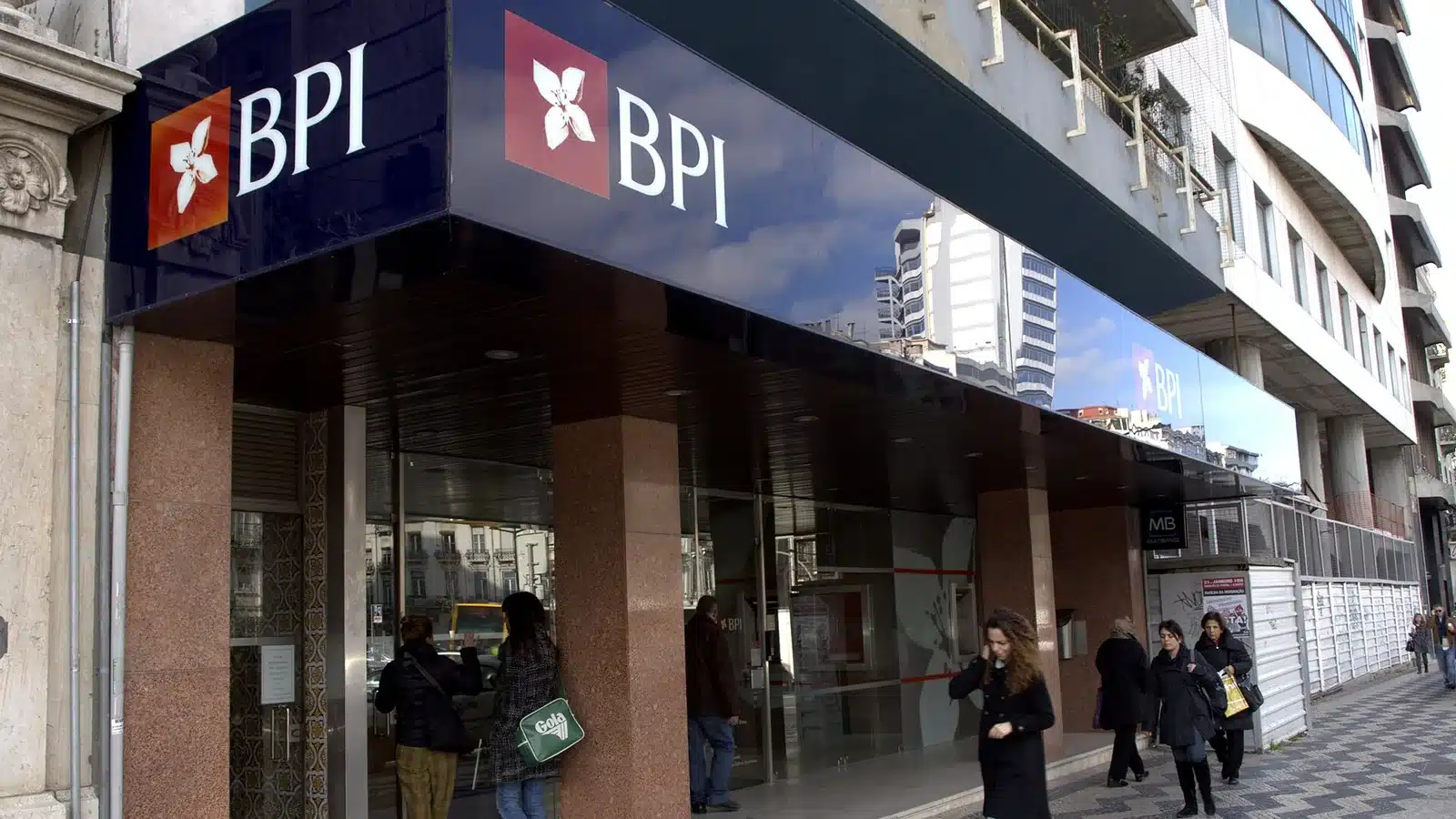
Portugal mortgage rates for foreigners currently sit in a market where new Portuguese housing-credit rates are around the low-3% area, but a non-resident offer can cost more. As a concrete published example, BPI’s September 2026 non-resident illustration for a €150,000, 30-year loan at 70% LTV shows a three-year mixed rate with a 2.950% initial TAN and 4.2% TAEG when specified optional products are maintained; its variable illustration shows a 3.463% TAN and 4.3% TAEG under those bundled conditions. Those are provider examples, not a market-wide quote.
The central comparison is therefore not “foreigner versus Portuguese” in isolation. It is resident status + risk profile + LTV + income quality + rate type + total annual cost. Ask every lender for the same loan amount, term and property value, then compare the FINE rather than the headline spread alone.
Portugal mortgage rates for foreigners: the September 2026 picture
There are three different numbers to keep separate. First is the wider euro-rate environment: the European Central Bank’s key rates currently include a 2.25% deposit-facility rate and a 2.40% main refinancing rate. Second is the rate observed across Portuguese mortgage contracts. INE reported that the implicit rate on all housing-credit contracts reached 3.135% in July 2026, while contracts concluded in the previous three months averaged 2.910%. Third is the price a specific bank offers you after underwriting. Only the third number determines your mortgage.
Banco de Portugal’s own statistics also show why a generic “average mortgage rate” can mislead an international buyer. In April 2026, before the June ECB increase, the average rate on new Portuguese main-home loans was 2.74% for mixed-rate operations and 2.96% for variable-rate operations. These datasets mainly describe lending to the eligible populations within the statistical scope; they are a market benchmark, not a promise to a non-resident borrower.
2.950% initial TAN · 4.2% TAEG
Initial fixed period, then 6-month Euribor + 0.75% spread in the illustrated bundled case. Assumptions: €150,000, 30 years, 70% LTV and specified optional associated products.
3.463% TAN · 4.3% TAEG
Based on the 6-month Euribor average for August 2026 + 0.75% spread in the illustrated bundled case, using the same €150,000 / 30-year / 70% LTV assumptions.
4.350% TAN · 5.2% TAEG
Payment certainty for the full term, at a higher current nominal rate. The same core financing assumptions and associated-product conditions apply.
Variable or mixed
Variable uses 6-month Euribor + spread; mixed fixes the first five years. Financing is up to 70% of the lower of purchase price or valuation, with pricing determined by profile.
Read published examples as snapshots. BPI states that its September illustrations depend on customer profile, product bundle and campaign conditions. UCI explicitly says the spread varies with the loan conditions. Use these pages to understand the market structure, then request a personalized FINE.
Foreign national and non-resident are not the same mortgage profile
Foreign resident in Portugal
A British, American, Brazilian, Indian or other foreign citizen who is legally and fiscally resident in Portugal, earns stable income and is buying a permanent home may be assessed through a resident mortgage route, depending on the lender. Nationality remains part of compliance and risk checks, but “foreign” does not automatically mean “non-resident product.”
Foreign non-resident
Someone living and earning abroad is more likely to face a dedicated non-resident policy: lower maximum LTV, more documentation, country restrictions and closer scrutiny of income currency. BPI’s published non-resident scheme, for example, limits eligibility to specified countries and nationalities; UCI offers a dedicated non-resident route with its own underwriting framework.
This distinction is crucial when researching Portugal mortgage rates for foreigners because two people with the same passport can receive materially different terms if one is established in Portugal and the other is paid abroad. Before comparing rates, tell the bank exactly where you reside for tax purposes, where your employer or business is based, what currency you are paid in and whether the property will be your main home, a second home or a rental investment.
What actually determines your interest rate
For a variable Portuguese mortgage, Banco de Portugal explains the basic formula as index + spread. The index is usually Euribor at a defined tenor; the spread is freely set by the lender for the contract. The regulator identifies borrower credit risk, LTV and the institution’s funding cost among the factors that can affect that spread. Mixed-rate mortgages substitute a fixed rate for an initial period and then typically move to Euribor plus spread.
Loan-to-value
More equity reduces lender exposure. For non-residents, published 70% caps mean a 30% deposit is often the starting point, not the total cash requirement.
Income reliability
Stable salary, employment seniority, documented business income, pension income and a clean debt record can materially affect approval and pricing.
Income currency
Income outside the euro adds foreign-exchange risk. A lender may stress the repayment capacity more conservatively or limit which jurisdictions it accepts.
Product bundle
Optional account, insurance, salary-crediting or other products can reduce the spread, but their own fees can erase part of the headline saving.
That is why the best Portugal mortgage rates for foreigners cannot be ranked reliably from a single advertised spread. The cheapest-looking TAN may sit beside higher insurance premiums, account charges or one-off fees. The correct comparison tool is the European Standardised Information Sheet, or Ficha de Informação Normalizada Europeia (FINE), which shows TAN, TAEG, total amount payable, fees, insurance costs and the effect of optional associated products.
The 70% LTV reality: calculate cash before rate-shopping
Banco de Portugal’s current macroprudential framework allows up to 90% LTV for a borrower’s own permanent home and 80% for other purposes, calculated against the lower of purchase price and valuation. Those are regulatory ceilings, not guaranteed financing levels. Dedicated foreign non-resident offers can be stricter: BPI and UCI both publish dedicated non-resident financing capped at 70% in the cited product conditions.
€300,000 purchase × 70% financing = €210,000 mortgage.
The buyer must therefore provide at least €90,000 of purchase equity before acquisition taxes, mortgage taxes, bank costs, legal work, registration and any valuation shortfall. If the bank values the property below the €300,000 purchase price, the required cash rises because the lender uses the lower recognized value in its LTV calculation.
For a 30-year €210,000 loan, an illustrative 2.95% nominal rate produces a payment of about €880 per month; 3.463% produces about €939; and 4.35% produces about €1,045. These are pure amortization illustrations using a constant nominal rate, not TAEG calculations and not quotations. Insurance, account charges, fees and any later Euribor movement are excluded.
≈ €880 / month
About €106,698 total interest over 30 years if the rate never changed. Comparable to a current initial mixed-rate level, not a guaranteed full-term rate.
≈ €939 / month
About €127,918 total interest over 30 years if unchanged. Comparable to a current published non-resident variable TAN example.
≈ €1,045 / month
About €166,346 total interest over 30 years if unchanged. Comparable to a current published non-resident full-fixed TAN example.
Approval limits matter as much as the advertised rate
Banco de Portugal requires lenders to assess solvency before granting a mortgage. The current framework says total monthly debt service should generally not exceed 45% of net monthly income, while the lender must also consider age, professional situation, regular income and expenses, credit obligations and future risks such as retirement or a rise in payments under variable and mixed rates. A positive solvency assessment still does not oblige a bank to lend.
Prove identity and Portuguese tax number
Expect passport or ID and a Portuguese NIF. A lender also performs anti-money-laundering and source-of-funds checks appropriate to the transaction.
Document income and existing debt
Non-resident lenders commonly request tax returns, payslips or company accounts, employment evidence, bank statements and information about other loans. UCI’s published checklist also asks for a credit-liability report from the country of residence.
Check property and valuation
Credit approval and property approval are separate. The bank valuation affects LTV, while your legal due diligence should independently verify ownership, charges, licences and the transaction documents.
Compare formal FINE documents
Normalize the loan amount, term and LTV across lenders. Compare TAEG and MTIC alongside TAN, initial fixed period, Euribor tenor, spread, insurance assumptions, account costs and one-off fees.
Do not ignore taxes and fees when choosing the mortgage
The mortgage itself creates costs beyond interest. Banco de Portugal states that Stamp Duty on housing credit is 0.6% of the financed amount for terms longer than five years, while commissions are generally subject to 4% Stamp Duty. On the €210,000 worked example, the credit Stamp Duty alone is €1,260. TAEG captures many credit-related costs, but not every transaction expense; notarial costs, for example, are excluded from TAEG under the regulator’s explanation.
There is also a major 2026 purchase-tax issue for overseas buyers. Under the current IMT Code, a person who is non-resident for Portuguese tax purposes is generally subject to a 7.5% IMT rate on an urban residential purchase unless a statutory exception applies, including specified routes tied to prior or later Portuguese tax residence or qualifying affordable rental use. This is a property-acquisition tax rule, not a mortgage-rate rule, but it materially changes the cash available for your deposit and therefore can change the LTV you can achieve. Read the current IMT Code Article 17 before committing funds.
For a fuller acquisition budget, see PortugalPath’s verified guide to buying property in Portugal, including current costs, taxes and purchase steps. The mortgage should be one line in the completion budget, not the budget itself.
If your property plan is connected to relocation, residence or a wider move to Portugal, separate the mortgage decision from the immigration and tax-residence questions. PortugalPath can help you map the practical sequence and identify which issues need regulated banking, legal or tax advice.
How to compare Portugal mortgage rates for foreigners properly
- Compare identical scenarios. Ask each lender to quote the same purchase price, valuation assumption, loan amount, term and rate type.
- Request both bundled and unbundled pricing. Banco de Portugal allows optional associated products in exchange for better credit pricing, but you should compare their real annual cost against the spread reduction.
- Use TAEG for cost comparison, TAN for rate mechanics. TAEG is designed to aggregate interest and many mandatory or assumed credit costs; TAN tells you the nominal rate used to calculate interest.
- Ask what happens after the fixed period. For mixed products, record the Euribor tenor, post-fixed spread, review frequency and the payment at a stressed future rate.
- Check early-repayment terms. Under the general legal framework, the maximum commission is normally 0.5% of capital repaid during a variable-rate period and 2% during a fixed-rate period, subject to statutory exceptions.
- Confirm country eligibility before paying for valuation or legal translations. Some non-resident products accept only specified countries or borrower profiles.
- Keep a cash buffer outside the deposit. Acquisition tax, 0.8% property Stamp Duty, mortgage Stamp Duty, bank fees, legal costs and valuation gaps can consume significant cash at completion.
The most useful decision rule is simple: choose the lowest robust all-in cost that still fits your risk tolerance and cash plan, not the lowest advertised spread. A mixed rate can be attractive when the initial fixed period is competitively priced, but it transfers future Euribor risk back to you. A full fixed rate gives certainty but may carry a higher starting TAN and a higher early-repayment commission. A variable rate can be cheaper or more flexible at some points in the cycle, but your payment moves with the index.
Portugal mortgage rates for foreigners are therefore best treated as a personalized underwriting outcome inside a regulated framework. In September 2026, non-resident buyers can find published financing up to 70% LTV and a range of mixed, variable and fixed structures, but eligibility, pricing and country acceptance differ materially by lender. Secure financing evidence before signing a promissory purchase contract that puts your deposit at risk, and compare written FINE documents before deciding which bank is actually cheaper.
Sources and Verification
Rates, product examples and regulatory points were checked against current sources on 2 September 2026. Provider rates are examples, not endorsements or personalized offers.
- Banco de Portugal — housing-credit interest rates: rate structures, spread, TAEG, MTIC and credit Stamp Duty.
- Banco de Portugal — solvency assessment: current LTV, DSTI, maturity and underwriting framework.
- European Central Bank — official key interest rates: current euro-area policy-rate context.
- Banco de Portugal BPstat — April 2026 lending-rate statistics: average new mixed and variable main-home mortgage rates.
- INE — July 2026 implicit mortgage-interest statistics: recent observed Portuguese housing-credit rates.
- BPI — foreign non-resident mortgage: September 2026 representative fixed, mixed and variable examples and 70% LTV.
- UCI — non-resident mortgage: dedicated underwriting, 70% maximum financing and document requirements.
- Banco de Portugal — early repayment FAQ: current maximum early-repayment commissions for variable and fixed-rate housing credit.
- Autoridade Tributária — IMT Code Article 17: current 2026 residential IMT rule for non-residents and statutory exceptions.
- Autoridade Tributária — buying a home: IMT and Stamp Duty: official 0.8% acquisition Stamp Duty and purchase-tax guidance.
Featured photo credit: Jakub Zerdzicki / Pexels