Portugal Path | Information checked: 21 November 2026
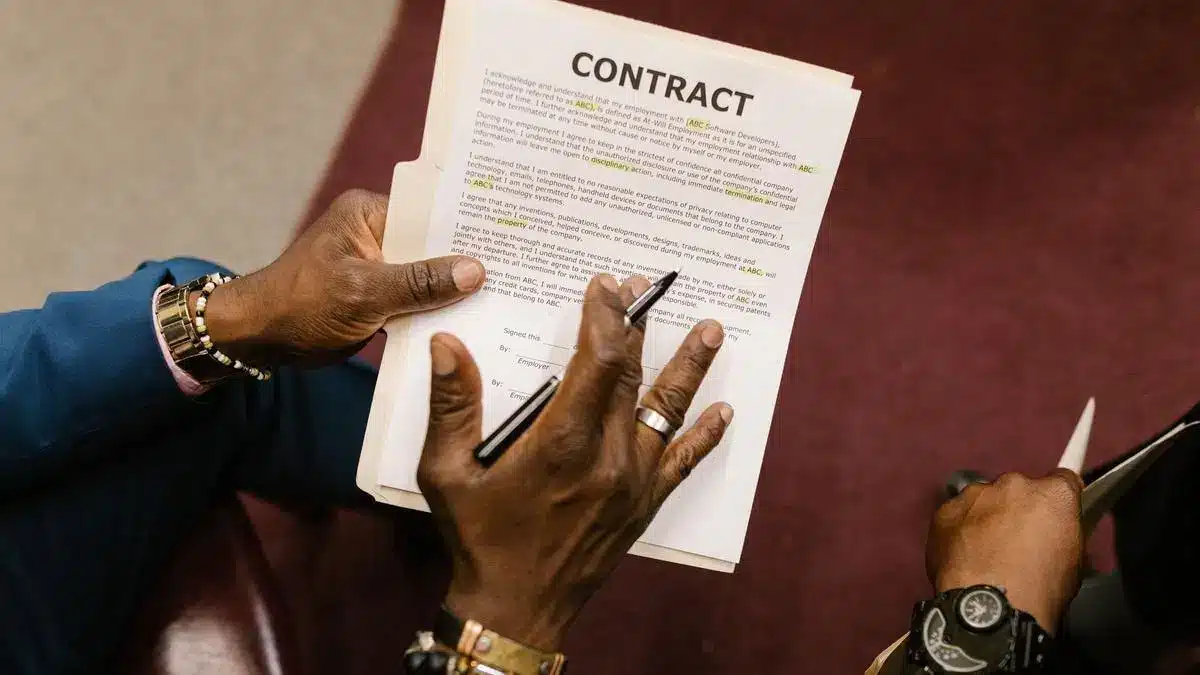
Before relying on a probation clause, establish three things: whether a probation period applies, how long it is after any relevant reductions, and how its days are counted. The number printed in a standard agreement is only the starting point for that review.
The practical consequences matter in both directions. An employee deciding whether to leave needs to know the applicable conditions. An employer’s notice also needs to be checked against the actual relationship and the point reached in the period. A description such as “still on probation” does not answer those questions by itself.
This guide addresses ordinary employment governed by Portugal’s Labour Code. Public-employment rules, particular collective instruments and earlier contractual arrangements may require separate analysis. Keep the signed agreement and the history of the work available when asking about your own position.
First establish whether probation was excluded
Article 111 describes probation as the initial stage of employment during which both sides assess continuing the relationship. It can be excluded by written agreement. The same article creates a presumption of exclusion where the employer fails to communicate the required probation information within the applicable deadline. Diário da República — Labour Code, Article 111.
The relevant information includes duration and conditions. Article 107 places that information in the group due by the seventh day following the start of performance. PGR Lisboa — Labour Code, Article 107.
Locate the clause and any separate written information you received. Record when the documents were supplied, not just the date printed on them. If information arrived in an attachment or through an employee portal, retain the relevant communication and your own copy where permitted.
An unclear or missing document deserves a specific question. Ask which probation arrangement is being applied and where its duration and conditions were communicated. If the response affects a proposed termination, have the actual documents assessed promptly rather than treating a general explanation as a decision about your case.
Identify the correct starting duration
The following are statutory starting points, before an applicable reduction or exclusion. The legal category and actual duties matter. Diário da República — Probation glossary.
| Employment situation | Starting period |
|---|---|
| Ordinary open-ended employment | 90 days |
| Open-ended role involving specified technical complexity, responsibility, special qualification or trust | 180 days |
| Open-ended management or senior-executive role | 240 days |
| Fixed-term contract of at least six months | 30 days |
| Fixed-term contract below six months | 15 days |
| Uncertain-term contract expected to last no more than six months | 15 days |
| Longer uncertain-term contract | 30 days |
| Comissão de serviço | Only if expressly agreed, up to 180 days |
Article 112 also provides a 180-day starting period for first-job seekers and long-term unemployed workers, subject to the relevant reductions. Seniority runs from the beginning of probation. Diário da República — Labour Code, Article 112.
Ask why the proposed category applies. A word such as “senior” in an English job title is not a complete explanation of the legal classification. Describe the actual responsibilities, decision-making authority and qualifications when seeking advice.
For an uncertain term, identify the expected duration used in the assessment. Keep that estimate distinct from the event ending the contract. Employment Contract Types in Portugal explains the underlying distinction between fixed and uncertain terms.
Bring earlier work and training into the review
Article 112 includes these reduction or exclusion rules:
- Same employer: earlier term employment for the same activity, temporary work at the same post, services for the same object, or a professional traineeship in the same activity.
- Different employer: earlier fixed-term employment of at least 90 days can reduce or remove the first-job/long-term-unemployment period.
- Different-employer traineeship: a positively assessed professional traineeship in the same activity, lasting at least 90 days within the preceding twelve months.
Diário da República — Labour Code, Article 112, paragraphs 4–6.
In a fictional calculation, assume a 90-day starting period and 60 days of qualifying earlier service with the same employer. Applying that reduction leaves 30 days. The assumption that the earlier service qualifies must be established before using the arithmetic.
Prepare evidence of the earlier relationship: employer identity, dates, duties, contractual form and any traineeship assessment. A role description can help show what work was actually performed when two documents use different job titles.
Do not reduce the review to a single question about whether you have worked in Portugal before. The rule may depend on the employer, activity, type of previous agreement, length of service and assessment. Record those facts accurately, including relevant work performed elsewhere, so an adviser can examine their significance.
Check any written agreement or applicable collective rule that addresses a shorter period. Have the resulting duration confirmed before entering an end date into a personal calendar. Keep the original calculation as well as any later correction.
Count from actual performance and account for excluded days
Article 113 starts the count when the employee begins performing the work. Employer-directed training is included only up to half the probation period. Absence days, including justified absences, leave, authorised dispensation and suspension are excluded from the count. Diário da República — Labour Code, Article 113.
Count consecutive calendar days, rather than only worked shifts, subject to those exclusions. In a judgment applying Article 113, the Évora Court of Appeal explained that weekly rest, complementary rest and public holidays do not interrupt the count. Diário da República — Évora Court of Appeal, 15 April 2021.
For a fictional 30-day period, the training-count ceiling is 15 days. That is a counting rule; it does not answer separate questions about the training agreement, payment or whether earlier training changes the applicable probation duration.
Build a dated record with the actual work start, relevant training and any interruption. Ask payroll or HR to explain the calculation they are using. Reconcile differences in the underlying facts before debating a final date.
For instance, a contract-signing date, an induction date and the first day in the operational team may all be different. Record what happened on each date. Avoid selecting whichever one produces the result you prefer without examining whether it marks the start of performance or qualifying training.
If an absence occurs, retain the communication and the employer’s record of its category. Ask how it affects the calculation. A probation review meeting scheduled months earlier may no longer coincide with the legally relevant endpoint.
Use probation to assess the work in a structured way
Establish what competent performance looks like in the role. Ask which tasks you should be able to complete, what training will be provided and who will give feedback. Agree an early opportunity to discuss progress, especially if access or equipment is delaying the work.
Keep brief notes of practical matters you want to raise. Separate a skill you need to develop from a process that has not been explained or a system you cannot yet use. This makes feedback more useful to both sides.
You are also assessing the role. Compare the actual duties, schedule, management and workplace with what was agreed. Identify which differences can be resolved and which affect your decision to stay. A discussion about a specific recurring issue is more productive than waiting until frustration becomes a general complaint.
The employment relationship already exists during this period. Employer duties concerning remuneration and working conditions continue to matter; probation should not be confused with a separate unpaid recruitment exercise. Diário da República — Labour Code, employer duties.
Review your first payment in the ordinary way. Confirm the period covered, relevant pay lines and any deductions through How to Read a Portuguese Payslip. Keep pay questions separate from feedback on performance so neither issue disappears into the other.
Understand the notice rules before acting
During probation, either party can generally end the contract without establishing just cause or a right to termination compensation, subject to a contrary written agreement and the statutory exceptions. Employer notice depends on the period already elapsed. Diário da República — Labour Code, Article 114.
| Probation already elapsed | Employer’s statutory advance notice |
|---|---|
| No more than 60 days | No minimum under these thresholds |
| More than 60 days, up to 120 days | 7 days |
| More than 120 days | 30 days |
Failure to give the required employer notice generates payment corresponding to the missing notice. These thresholds concern employer termination; they should not be presented as the employee’s notice schedule. Diário da República — Labour Code, Article 114.
Before sending notice, confirm that probation still applies and check written conditions. If it has ended, obtain advice on the ordinary termination rules.
Use clear written communication and keep proof of delivery as a practical record. Distinguish the date of communication, any last working day and the date on which the employment ends. If these differ in the employer’s response, ask for clarification before planning a handover around an assumption.
Special protections and employer reporting still require attention
CITE explains the employer’s obligation to report probation termination involving a pregnant, postpartum or breastfeeding worker, or a worker on parental leave, within five working days. CITE — Mandatory communications.
Current Article 114 also covers a qualifying caregiver in that reporting provision. It requires a separate ACT notification for the specified first-job-seeker/long-term-unemployed category within fifteen days. Abusive termination is unlawful, with the abusive character determined by a court. Diário da República — Labour Code, Article 114, paragraphs 5–8.
If a protected circumstance or suspected discriminatory treatment is relevant, give an adviser the dates and communications needed to assess it. Keep factual records of what was said or done, without making a conclusion depend solely on an informal label used by a manager.
An employer reporting obligation is distinct from your own decision about seeking assistance. Ask what response or procedure is appropriate for your situation. Avoid assuming that a routine payroll entry confirms that every required step has been completed.
Reconstruct a disputed case before seeking an answer
A useful enquiry contains a small chronology rather than only the clause. Include when the agreement was signed, when work began, when probation information was received, the proposed duration and any earlier relevant service. Add interruptions and the date and wording of any termination communication.
Consider a fictional employee who receives a notice described as “termination during probation”. Their file includes earlier work for the same employer and an absence during the new agreement. The first task is to assess the earlier-service rule and the current count. Merely comparing the notice date with the number in the new contract would leave both relevant facts unresolved.
ACT provides information about employment relationships and workplace safety and health. Use its current information service for the appropriate contact route. gov.pt — Request information from ACT.
Where termination is contested, obtain prompt advice on the particular legal route and any time limit. Keep the question about final payments and documents alongside the dispute. A disagreement about the legal basis should not make the payroll calculation impossible to trace.
Keep the end of probation distinct from the end of employment
If work continues, confirm any outstanding practical arrangements: responsibilities, training, schedule and the next feedback conversation. Keep the employment record connected to its actual beginning rather than restarting your personal file at a probation review.
If the relationship ends, ask for an itemised account of amounts due and the relevant employment documents. Use Resignation and Dismissal in Portugal and Holiday and Christmas Allowances in Portugal to follow those questions in detail.
The useful result of the review is a defensible timeline: the applicable period, any reduction, the days counted and the action taken. Keep that timeline with the evidence that supports it so later discussions can focus on the actual point of disagreement.
Sources and verification
- Labour Code, Article 111: existence and exclusion.
- PGR Lisboa — Labour Code: Article 107 information deadline.
- Diário da República — Probation glossary: ordinary starting periods.
- Labour Code, Article 112: categories, reductions and seniority.
- Labour Code, Article 113: counting.
- Évora Court of Appeal, 15 April 2021, case 1651/20.2T8PTM.E1: continuous count and excluded absences.
- Labour Code, employer duties.
- Labour Code, Article 114: termination, notice and reporting.
- CITE — Mandatory communications.
- gov.pt — ACT information service.
Information checked on 21 November 2026. The calculations and case illustrations are fictional. The applicable contract, collective provisions, earlier service and actual dates must be assessed before applying a probation rule to an individual case.