

Last verified: 12 September 2026
The official fee for an adult grandchild applying for Portuguese nationality by attribution is currently €175. For a minor using the same attribution route, the nationality procedure is free. The total amount a family actually spends can be higher because foreign certificates, apostilles or other legalisation, certified translations, language/culture evidence, postage, consular acts and optional professional representation are separate from the IRN nationality fee.
For the search Portuguese citizenship for grandchildren cost, the decisive distinction is between the official Portuguese nationality fee and the applicant’s total case budget. The current IRN fee schedule classifies the grandchild route under attribution of Portuguese nationality, not the €250 adult acquisition/naturalisation category.
€175
€0
Official fee position checked against the current IRN fee regulation and the IRN Model 1D forms for adult and minor grandchildren.
Why €175 Is the Correct Official Fee
Portugal’s Nationality Law treats a qualifying grandchild of an original Portuguese citizen as a person who may obtain Portuguese nationality of origin under Article 1(1)(d), provided the statutory conditions are met. That legal classification matters for cost. The current IRN Registry and Notarial Fee Regulation lists €175 for an adult procedure involving the registration of a foreign birth or the attribution of Portuguese nationality.
The position is independently confirmed by the current adult IRN Model 1D for grandchildren, which states a cost of €175. The minor version of Model 1D states that the cost is free, and the fee regulation separately makes attribution declarations and attribution registrations concerning minors free.
This is why a generic statement that “Portuguese citizenship costs €250” should not be applied automatically to a grandchild case. The €250 figure in the current IRN schedule is the standard adult fee for acquisition of nationality by declaration, adoption or naturalisation. The grandchild route in Article 1(1)(d) is an attribution route. PortugalPath’s broader guide to Portuguese citizenship by descent costs explains this distinction across parent, grandparent and great-grandparent cases.
The 2026 Law Change Matters More Than the Fee
The price is straightforward; eligibility and proof are less so. Organic Law 1/2026 of 18 May entered into force on 19 May 2026. It retained the grandchild route in Article 1(1)(d), but added Article 1(3), which now requires a grandchild applying under that provision to satisfy the conditions in Article 6(1)(c) through (h).
For a new post-19 May 2026 case, the statutory text therefore reaches beyond the older formulation that effective connection could be recognized simply through knowledge of Portuguese. The new cross-reference includes sufficient knowledge of Portuguese language and culture, Portuguese history and national symbols; knowledge of fundamental rights and duties and the political organization of the Portuguese state; a solemn declaration adhering to the fundamental principles of the democratic rule of law; and the specified criminal, national-security and sanctions conditions.
The same reform contains an important transition rule. Administrative nationality procedures that were already pending when the new law entered into force continue under the previous wording of the Nationality Law. In other words, the date on which the case became pending can materially affect the legal requirements. IRN also published a notice before the change confirming that, for online submissions affected by the reform, it would treat the date of online submission as the relevant filing date.
For new grandchild cases, Article 1(3) cross-refers to Article 6(1)(c)–(h), adding substantive knowledge, declaration, criminal, security and sanctions conditions.
The Justice grandchild guide still describes effective connection through knowledge of Portuguese and shows an older criminal-condition formulation.
The consolidated Nationality Regulation still records its latest amendment as 23 July 2025, while Justice says some 2026 changes require complementary regulation and marks content as being updated.
A Real Source Conflict: Law and Web Guidance Are Not Fully Aligned
This is the most important evidence issue in the current Portuguese citizenship for grandchildren cost search landscape. The Justice grandchild guidance page, accessed on 12 September 2026, still says the connection to the Portuguese community is recognized through knowledge of the Portuguese language. It also lists a criminal condition using wording that predates the May 2026 reform.
By contrast, the enacted Nationality Law now contains the broader Article 1(3) cross-reference described above. The Justice online nationality service, updated after the reform, explicitly says that some changes depend on complementary regulation and that its content is being updated. Meanwhile the consolidated Nationality Regulation currently shows its latest amendment as 23 July 2025.
Do not budget only for the €175 fee and assume that an older A2-language checklist settles a new 2026 application. The statutory rule has changed, while the public-facing operational material has not yet caught up consistently. Before spending money on tests, certificates or professional work, confirm the current evidence format accepted for the new culture, history, symbols and civics requirements.
This does not make the €175 fee uncertain: the fee schedule and adult Model 1D are clear on that point. The uncertainty concerns the implementation details of the new substantive requirements. A responsible cost estimate therefore separates a fixed official fee from costs that may arise once the authorities publish or clarify the required evidence.
What Documents Can Add to the Total Cost?
The current Justice grandchild page lists the applicant’s legalized birth certificate, the legalized birth certificate of the parent who is the child of the Portuguese grandparent, and the Portuguese grandparent’s birth certificate or identifying registry details. It also calls for foreign criminal-record documentation and, where necessary, certified Portuguese translations.
Foreign documents are where total spending can diverge sharply from the €175 headline fee. The issuing country determines certificate charges. The relevant authority in the issuing jurisdiction determines apostille fees where the Hague Apostille Convention applies. Translation prices are private market prices unless the translation is performed through an official channel with its own tariff. Courier or postal costs also vary.
IRN’s foreign-document guidance adds useful nuance: foreign-language documents generally require certified Portuguese translation, but translation can be dispensed with in some situations, including certain English, French or Spanish documents where the competent officer knows the language. Public documents from another EU Member State can also benefit from specific EU rules. That means “translation required” should not be turned into a universal private cost without checking the document and submission context.
Another possible expense is civil-registry housekeeping. Names, marriages, parentage and dates must connect the generations coherently. If a foreign civil-status event first needs to be transcribed or corrected in the Portuguese register, that may involve a separate registry procedure with its own fee. It is not accurate to build one universal “all-in” grandchild price around such costs because not every family needs the same preliminary work.
Who Handles the Application and How You Can File
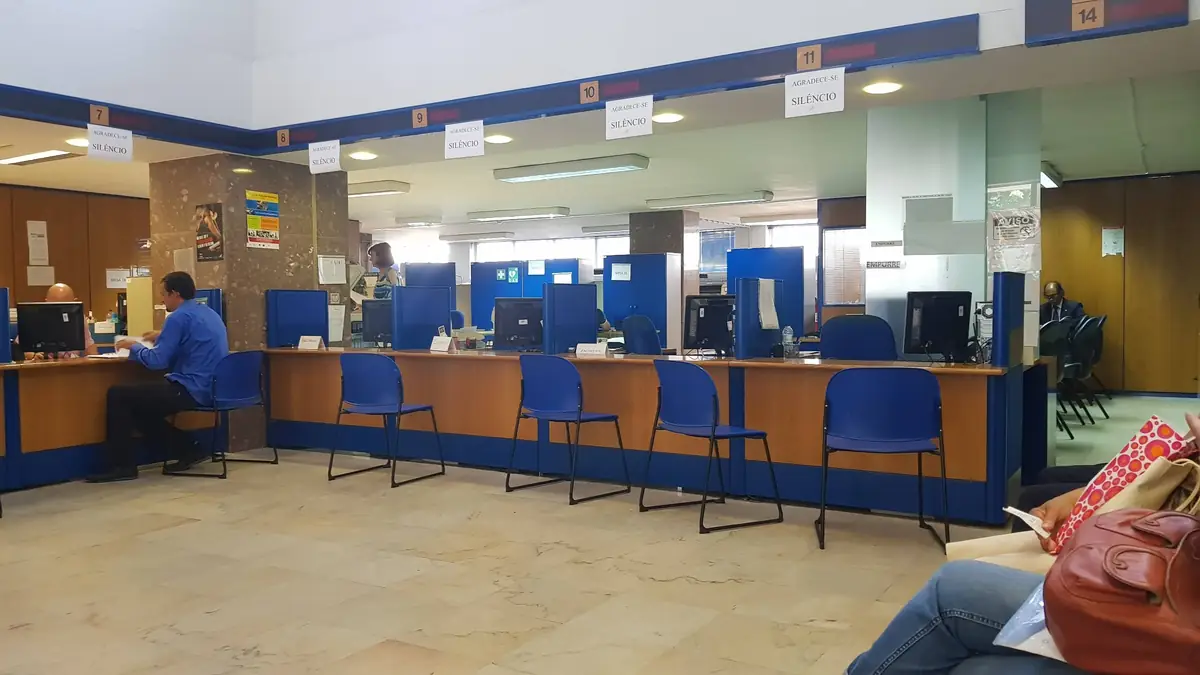
The responsible Portuguese body is the Instituto dos Registos e do Notariado (IRN), not AIMA. The Justice guide says a person without a professional representative can submit through specified nationality counters, civil registry offices, the Conservatória dos Registos Centrais, a Portuguese consulate in the area where they live, or by post to the Central Registry.
Online submission works differently. The current Justice service states that the online nationality channel is for registered lawyers and solicitors acting as representatives, and that online filing is mandatory for those professionals. A self-represented applicant does not need to hire a professional merely to make the nationality application; the official channels include postal and in-person filing.
If you do use a lawyer or solicitor, treat the professional quote as separate from the government charge. Ask for a written scope showing whether it covers document review, Portuguese record searches, foreign-record coordination, translation management, responses to IRN requests and any appeal or litigation. No private provider can guarantee that nationality will be granted.
How to Build a Sensible Budget Before Paying
1. Confirm the legal route
Verify that the qualifying ancestor is an original Portuguese grandparent who did not lose that nationality, and that Article 1(1)(d) is actually the route.
2. Confirm the filing-date regime
A case pending before 19 May 2026 is expressly protected by the transition rule; a new case is governed by the amended law.
3. Price only the documents you need
List certificates, legalisation, translations and any preliminary registry work before ordering duplicates or time-sensitive records.
4. Verify new 2026 evidence
Because the regulation and public guide are not yet fully aligned with the amended statute, confirm how the new knowledge and declaration requirements are being implemented.
For a straightforward adult case, the fixed Portuguese government nationality charge remains €175. A total budget of exactly €175 is realistic only if no paid foreign records, legalisation, translation, postage, consular procedure or professional service is needed. For many overseas applicants, those ancillary costs will exist, but they are too country-specific to state responsibly as one universal figure.
For comparison, PortugalPath’s guide to Portuguese citizenship costs for children shows why age and route can change the official fee, while the citizenship-by-residence cost guide explains the separate €250 naturalisation fee. These are different legal categories and should not be mixed with grandchild attribution.
PortugalPath can help you structure the questions to verify, identify which records are missing and understand which costs are official versus private. Any nationality decision remains with the Portuguese authorities.
What to Verify Before Acting
Check the grandparent’s Portuguese birth record and nationality status first. Then verify the documentary chain from grandparent to parent to applicant. For a new application, do not rely exclusively on older web articles or an older form’s checklist to decide what proves the post-May 2026 substantive requirements. The current law is the controlling source, while the IRN and Justice operational material tells you how the administration currently receives and processes evidence.
Also separate three questions that are often collapsed into one: eligibility, official fee and total preparation cost. The first depends on the Nationality Law and the facts of the family line. The second is currently €175 for an adult grandchild and €0 for a minor attribution case. The third depends on the countries involved, the condition of the civil records and whether you choose paid assistance.
That is the practical answer to Portuguese citizenship for grandchildren cost in September 2026: €175 is the current official adult attribution fee, minors are free, and there is no defensible universal all-in price. The larger 2026 issue is not a hidden government charge but a change in the substantive grandchild requirements whose operational implementation is still not presented consistently across all official public materials.
Related PortugalPath Guides
Sources and Verification
This article explains publicly available rules and official fees; it is not an individualized nationality assessment. Where official operational guidance has not yet caught up with the amended statute, the uncertainty is stated rather than filled with assumptions.
Photo credit: Rakoon, 5 August 2018 — Source: Wikimedia Commons — License: CC0 1.0